Places & landmarks
The Parador de las Cañadas del Teide
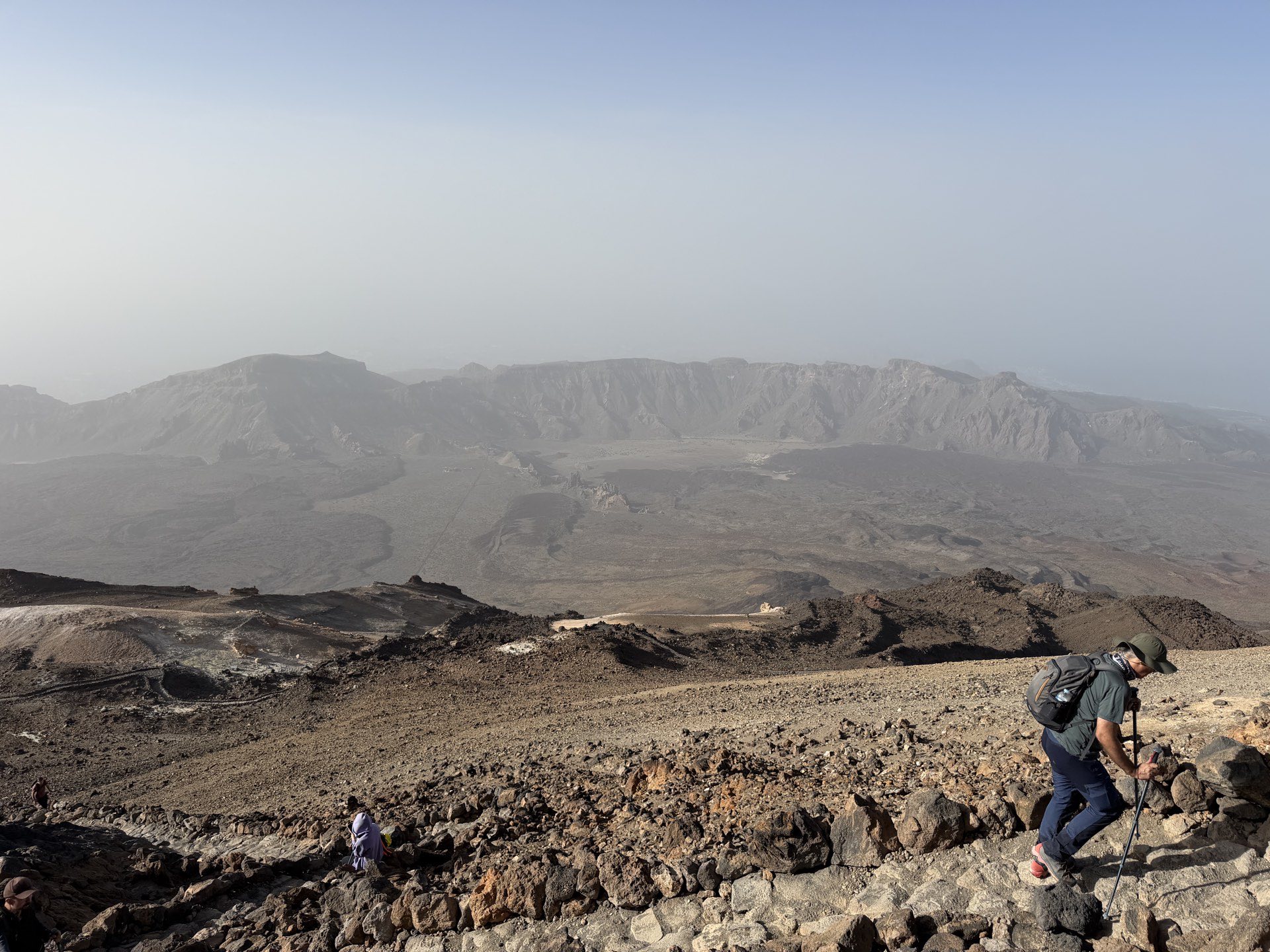
The Parador de Las Cañadas del Teide stands on the floor of the Las Cañadas caldera at 2,150 metres, the only hotel inside Teide National Park. From its terrace the Roques de García rise directly opposite, and the mountain’s cone fills the view to the south-west. To stay here is to experience the caldera after the day visitors have gone — a landscape that is shared at noon but private at dawn.
The parador idea
A parador is a Spanish state-run hotel, usually placed in a building of historic or natural importance. Some occupy castles, monasteries or palaces. This one takes the other route: a purpose-built structure set in a location that justifies the journey itself. The architecture is low, stone-coloured and deliberately unobtrusive. It does not compete with the surroundings. From the outside it reads as a lodgement built into the volcanic terrain — a line of rooms facing the rock wall, a restaurant with floor-to-ceiling glass pointing at Teide.
The choice to stay here is not about the building. It is about the fact that when the last coach leaves and the car park empties, you are still there.
The landscape after the crowds
During daylight hours the national park receives a steady flow of visitors. The TF-21 road carries cars and tour buses to the cable-car base station and the main viewpoints. Car parks fill. The Roques de García loop is busy by mid-morning. None of this is a problem — the park is large enough to absorb people — but it means the experience of the caldera during the day is a shared one.
What changes in the late afternoon is the noise and the movement. By 5 pm the flow has reversed. By half an hour before sunset the last day-tripper is gone. The hotel’s guests have the caldera to themselves. The road is quiet. The only sound is the wind across the pumice. The Roques de García, which in the morning were framed by people taking photographs, stand empty and still in the long light. The footpath that runs from the hotel into the rock formations — Trail 3 — becomes a private walk.
This is the reason to book a room. Not for the room itself but for the hours when the park belongs to its permanent residents: the lizards, the pipits, the wind, and the half-dozen people on the terrace.
Light at the ends of the day
The caldera floor is an open bowl. From it you see the full arc of the sky from one horizon to the other. At sunrise the mountain’s east-facing slopes catch the first colour while the floor is still in shadow. At sunset the reverse happens: Teide’s cone darkens against a glowing west, and its shadow stretches across the sea of clouds below.
That shadow is worth noting. From the caldera floor, and especially from a spot on the hotel’s approach road or the Roques de García path, you can watch Teide’s triangular silhouette project itself eastward across the island. It is visible for a few minutes around sunrise and again around sunset, provided the sky is clear. It is one of the sights that day visitors rarely see, because they are either still driving up or already driving down.
Anyone staying at the hotel can step outside ten minutes before these moments and be in position. No headlights, no timetable, no parking stress.
The night sky above the inversion
The caldera sits above the trade-wind inversion layer that caps the lower slopes of Tenerife for much of the year. Below the inversion the air is humid and often cloudy. Above it the air is dry, stable and exceptionally clear. The Parador is at 2,150 metres, well inside that clear zone. Add Spain’s 1988 Sky Law, which restricts artificial lighting near the observatories, and the result is a night sky that needs no introduction.
From the hotel’s terrace — or from any spot on the caldera floor away from the building’s own lights — the Milky Way is visible as a distinct structure. The stars are not dimmed by spill from towns. There is no settlement anywhere inside the park boundary. The nearest significant light source is the observatory at Izaña, a few kilometres east, and its lighting is shielded by law.
Guests do not need a tour, a guide or a telescope. They walk out the door and look up.
What to know before you stay
A few realities matter more here than at a coastal hotel.
| Fact | Detail |
|---|---|
| Altitude | 2,150 m; the air is noticeably thinner for those arriving from sea level |
| Temperature | Nights are cold year-round; snow falls in winter, frost is common outside summer |
| Isolation | No village, shop or alternative restaurant anywhere near — everything you need must come with you or be eaten in the parador’s restaurant |
| Road access | The TF-21 climbs steeply from both coasts and may close in snow; check conditions before travelling |
| Cable car | The base station is on the same road but not at the hotel; driving from the Parador to the cable car takes a few minutes but the two are separate locations |
Altitude affects people differently. Some feel nothing. Others notice shortness of breath on the stairs or a headache the first night. The remedy is the same everywhere: drink more water than you think you need, move slowly, and give yourself the first evening to acclimatise before doing anything physical.
The cold surprises visitors who have spent the day in the sun. At 2,150 metres the sun is intense, but as soon as it drops the heat leaves the air. A jacket, hat and gloves are not optional in any season. The restaurant keeps the interior warm, but the terrace, the walks and the night sky demand proper clothing.
The road is the only way in and out. The TF-21 from La Orotava or from Vilaflor is winding and can be slow, and in winter snow or ice may close the pass. The Teide National Park guide covers the access routes and conditions in more detail.
What you are here for
The Parador de Las Cañadas del Teide is not a resort. It is not a base for nightlife or shopping. It is a place from which to be inside the national park when the park is quiet. The room is a shelter, the restaurant is functional, the terrace is where the experience happens.
The best moments are unarranged: the sudden orange on the mountain at sunset, the clarity of Orion rising over the rock wall, the silence at 6 am when you step outside and there is nothing but the caldera and the sky. That is what the hotel provides — access to the empty hours.