Geology
Los Huevos del Teide: How the Teide Eggs Formed
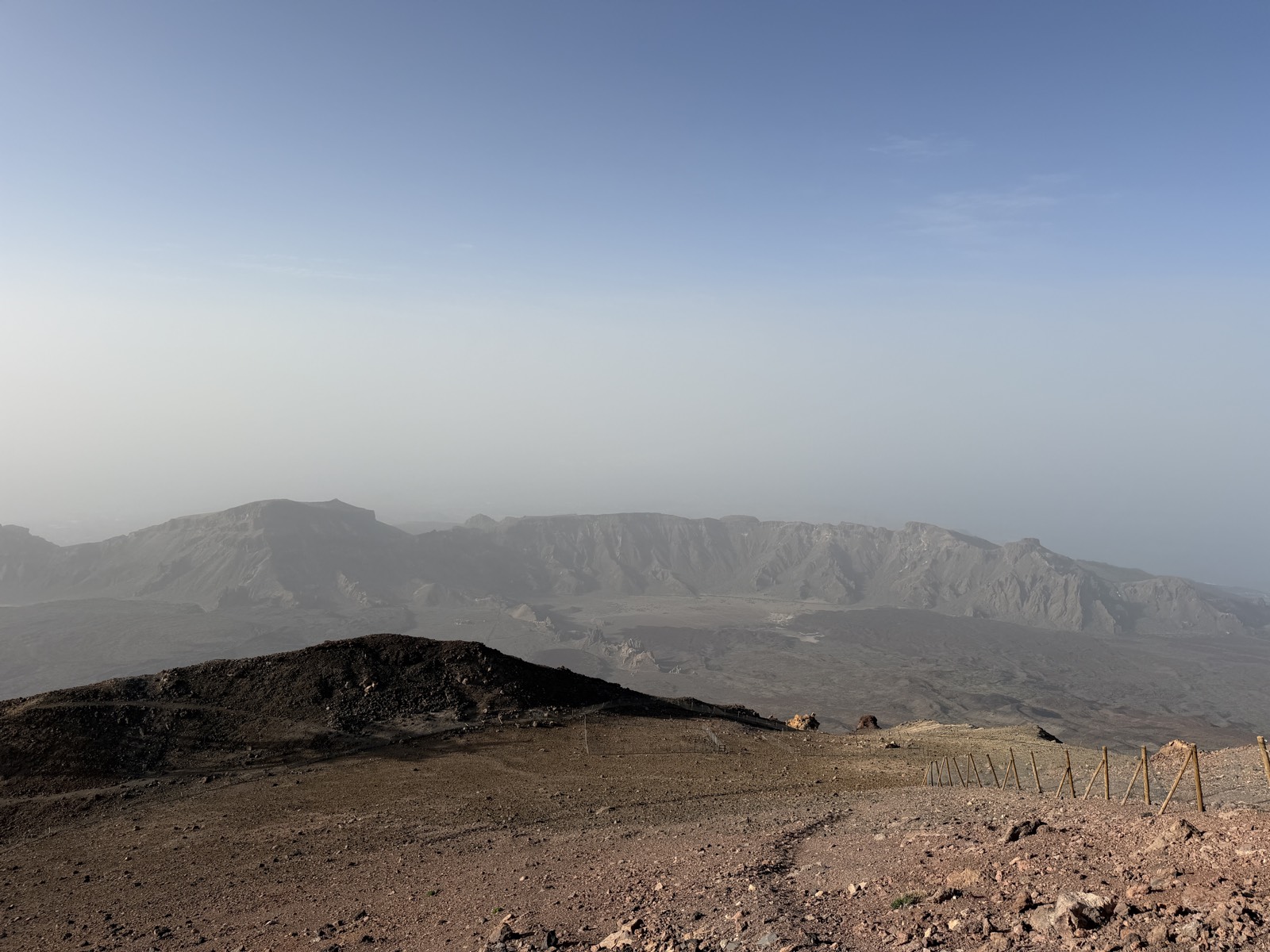
The first thing you notice, walking the pale pumice slopes of Montaña Blanca, is the contrast. The ground underfoot is a soft, near-white grey, the colour of old ash and pumice. Scattered across it, singly and in small clusters, sit dark volcanic boulders the size of beach balls. They look as though someone rolled them there and left them. That, more or less, is exactly what happened.
Los Huevos del Teide (the Teide eggs) are among the park’s most distinctive small features. They are also a neat geological puzzle made visible. Understanding how they formed means understanding something about the way lava behaves when it is still hot, still moving, and not yet done.
What the Teide eggs actually are
The Spanish name is Los Huevos del Teide, and they are also called bombas rodantes (rolling bombs). Both names describe the same thing: large, rounded boulders of dark lava sitting on the pale pumice of Montaña Blanca. They are not eggs in any biological sense, nor are they bombs in the military one. The term comes from volcanology, where a bomba is a blob of molten lava that solidifies in flight or during transport.
What makes the Teide eggs unusual is their location. Most volcanic bombs are found near the vent that ejected them. These are not. They lie scattered across the lower slopes of Montaña Blanca, well away from any obvious source. And they are not scattered randomly. They are concentrated along the line of the old trail, which follows the path of least resistance down the mountain’s flank.
The contrast is the point. Dark, weathered lava on bright pumice. The eggs stand out because the two materials could hardly look more different. On a sunny morning, with the light low, they cast long shadows across the white slope and are visible from a considerable distance.
How accretionary lava balls form
The mechanism that created the Teide eggs is straightforward once you picture it, though it took geologists a while to work out. A lump of lava detaches from a flow or from the edge of a vent while it is still hot and plastic (not quite liquid, not quite solid). It begins to roll downhill. As it rolls, ash, pumice fragments and smaller bits of lava stick to its surface, the same way a snowball picks up snow as it rolls. The lump grows larger, rounder, and more layered.
The result is an accretionary lava ball. The core is the original blob of lava. The outer layers are the material it gathered on its journey. The shape is determined not by the cooling process but by the rolling: transport, not solidification, is what gives the eggs their rounded form.
This is the point that catches people out. A casual observer might assume the eggs are simply unusually round volcanic rocks that cooled that way in place. They are not. The roundness is a product of motion. Had the lava lumps stopped rolling earlier, they would be lopsided or angular. Had they rolled further, they might be larger still. The size and shape of each egg record the distance it travelled and the consistency of the surface it crossed.
The process is not unique to Teide. Similar accretionary balls occur on other volcanoes where the right conditions meet: a steep slope, a loose surface of ash and pumice, and lava that is still plastic enough to pick up material rather than shatter. What makes the Teide examples notable is their visibility. On the pale pumice of Montaña Blanca, you can see them from a long way off.
Montaña Blanca as the setting
Montaña Blanca is a pumice cone on the lower flank of Teide, roughly 2,750 metres above sea level and about 2,000 years old. Its name (the white mountain) describes the colour of its surface. Pumice is light, porous volcanic glass, formed when gas-rich lava cools quickly and froths. The pumice that covers Montaña Blanca is pale grey to near-white, and it creates a surface that is loose underfoot and slow to walk across.
The trail that climbs Montaña Blanca (Trail 7, the standard walking ascent to the Altavista refuge and the summit) crosses this pumice slope obliquely. It is along this stretch that the Teide eggs are most visible. They sit on the surface as if placed there, dark specks on a white field. Some are solitary. Others lie in small groups, as though the rolling process produced clusters.
The pumice surface matters. A rolling lump of plastic lava would behave differently on hard rock than on loose, granular material. On pumice, it would sink slightly, pick up fragments, and grow. The eggs are embedded in the pumice to varying degrees: some sit almost on top, others are half-buried. This suggests that the surface was softer when they formed, or that subsequent erosion has exposed them further.
The age of the deposit is roughly 2,000 years, which places the eruption of Montaña Blanca within the period of human occupation of the Canary Islands. The Guanches would have seen it. Whether they had a name for the eggs, or a story about them, is not recorded.
Seeing them on the ground
If you walk Trail 7 from the Montaña Blanca trailhead towards the Altavista refuge, you cross the pumice slope at a steady gradient. The Teide eggs appear at intervals along this section, more frequent on the lower part and thinning out as the trail rises. There is no single marker or signpost: you are meant to notice them yourself.
They are protected, as everything in the national park is protected. Do not climb on them, do not move them, and do not take fragments. The eggs are fragile. Their layered structure means they can crack or crumble if handled, and once broken they cannot be restored. The same applies to the pumice surface: it is easily disturbed and slow to recover.
The best time to see them is in the morning, when the sun is behind you and the light picks out the contrast between the dark eggs and the pale ground. In the middle of the day, the glare from the pumice can wash out the detail. Late afternoon, the shadows lengthen and the eggs stand out again, but the light is lower and the colour shifts towards orange.
Photography is straightforward. A wide shot showing the eggs in their setting (dark boulders on white slope, with the summit of Teide rising behind) is the classic composition. A close-up can show the texture of the surface, the layering, and the way the pumice fragments are fused into the outer shell. Do not use a flash; natural light is better, and the eggs are not going anywhere.
What the eggs tell us
The Teide eggs are a small feature, but they illustrate a larger point about volcanic landscapes. What looks like a finished object (a round boulder sitting on a slope) may in fact be a frozen moment in a process that was still running. The eggs are not the end product of the eruption. They are a snapshot of transport interrupted.
This is a useful way to think about the rest of the mountain. The pumice of Montaña Blanca, the lava flows on the lower slopes, the layered structure of the caldera walls: all of them are stages in processes that are not finished. Teide is an active volcano. The eggs are a reminder that the mountain is still doing what volcanoes do, even if the timescale is longer than a human lifetime.
The eggs also show the importance of surface conditions in shaping volcanic deposits. A different slope, a different surface material, a different lava temperature: any of these would have produced something else. The eggs exist because the conditions were exactly right for rolling accretion. Change one variable and you get a different result.
Geologists have studied similar features on other volcanoes (on Etna, on Kilauea, on the flanks of Vesuvius), but the Teide eggs are among the most accessible and the most visible. They are not the largest or the most perfectly formed. They are simply the easiest to see and to understand.
A note on the walk
If you are planning to walk Trail 7 and see the eggs, the practical details are covered in the Teide hiking guide. The trail is unshaded and the surface is loose, which makes it harder going than the distance suggests. Water, sun protection, and sturdy footwear are essential. The eggs appear roughly in the first hour of the walk, depending on your pace.
There is no need to go out of your way to find them. They are on the trail, and you will see them if you look. The trick is to look. The pumice slope is a broad, open space, and the eye is drawn to the summit, not to the ground at your feet. Stop for a moment. Look down. The eggs are there, dark and round and older than you can easily hold in your mind.