Geology
The Icod Landslide: When Half a Volcano Slid Into the Sea
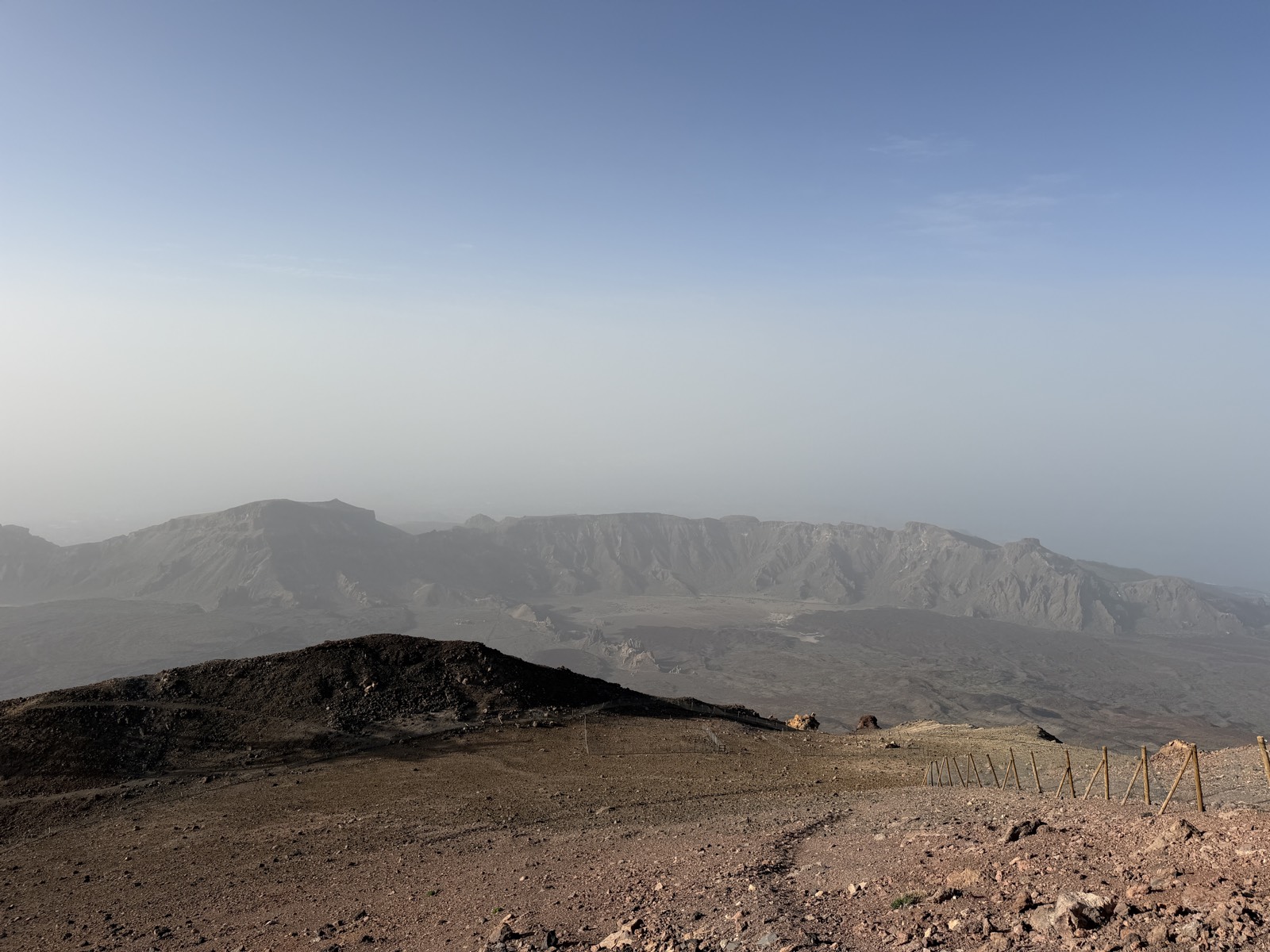
If you stand on the summit of Teide and look north, the mountain falls away more steeply than in any other direction. What you are seeing is not the original flank of an older volcano. It is the scar of one of the largest landslides in the recorded geological history of the Canary Islands. A collapse that removed roughly half of the island’s northern side around 180,000 years ago and set the stage for everything that has grown since.
The event is known as the Icod landslide, and its signature is written into the shape of Tenerife’s north coast and the seafloor beyond.
The mechanics of a flank collapse
Large ocean-island volcanoes share a problem. They grow fast, they build steep slopes on unstable submarine foundations, and they are often weakened by heat, hydrothermal alteration and the immense pressure of their own weight. At some point, a section gives way. A flank collapse is not a trickle or a slow creep. It is a catastrophic failure in which millions of cubic metres of rock detach and slide, often in a matter of minutes, into the surrounding ocean.
Tenerife has experienced several such events. The Icod collapse, around 180,000 years ago, removed a substantial portion of the island’s northern flank. The resulting depression is the Icod valley, a broad amphitheatre-shaped basin that opens onto the coast between the modern towns of Icod de los Vinos and Garachico. On a map, the valley is unmistakable: a deep bite taken out of the island’s profile.
The Orotava valley, further east, is generally attributed to a similar but earlier collapse. The two valleys are now separated by the ridge of La Orotava, but they share the same basic origin. Gravitational failure on a scale that is almost impossible to imagine.
What the collapse left behind
The visible evidence for the Icod landslide is in two places: on land and on the seafloor.
On land, the northern side of the Las Cañadas caldera is open. Where the rest of the caldera’s rim forms a near-continuous wall of rock, the northern section is missing entirely. This open side is not a volcanic crater. It is the headwall of the landslide, the surface along which the flank detached. The failure plane dipped northward, and the material above it slid down and out into the deep ocean basin beyond the coast.
On the seafloor, surveys have mapped extensive debris deposits. These are not neat layers. They are chaotic fields of huge, angular blocks, some the size of buildings, scattered across the seabed tens of kilometres north of the island. The material is exactly what you would expect from a giant collapse: broken rock, disaggregated by the violence of the slide and settled where the moving mass lost momentum and came to rest.
The precise extent and volume of these deposits remain subjects of research, and figures in the literature vary. What is not in doubt is that the debris field exists and that it is large.
The caldera debate: collapse or slide
The Icod landslide matters for a question that has occupied geologists working in the Canaries for decades: how did the Las Cañadas caldera form? Two main explanations have been proposed.
The vertical collapse model holds that the caldera is the result of large explosive eruptions, like those that formed the calderas at Santorini or Krakatoa. In this view, magma chambers emptied rapidly, the ground above them lost support and subsided, and the circular depression we see today is the result of that collapse.
The lateral collapse model argues that the caldera’s open northern side is the key clue. It suggests that the dominant process was not explosive emptying but giant flank failure, and that the caldera’s shape is primarily a landslide scar modified by later volcanism.
Most current thinking allows a combination of both. It is possible that the island experienced a series of large explosive eruptions that weakened the edifice, and that a flank collapse then removed a section that was already compromised. The caldera we see today is probably the product of both processes, partly overprinted and partly filled by the younger growth of Teide and Pico Viejo. The subject has its own treatment on the caldera page, which covers the debate in more depth.
What is clear is the sequence: the collapse came first, and Teide and Pico Viejo grew afterwards, inside the depression the landslide left behind. The modern mountain is not the original summit of Tenerife. It is a rebuilding, rising from a ruin.
Tenerife’s major geological events in sequence
The table below summarises the major events that shaped the island’s volcanic structure, from emergence to the recent past.
| Event | Approximate time | Significance |
|---|---|---|
| Island emergence | c. 12 million years ago | Oldest subaerial rocks; Tenerife rises above sea level |
| Giant north-flank landslides | c. 180,000 years ago (Icod); earlier (Orotava) | Removed substantial northern sections of the island |
| Las Cañadas caldera formation | Overlapping period | Partly from explosive eruptions, partly from lateral collapses |
| Montaña Blanca eruption | c. 2,000 years ago | Pumice cone on the slopes of Teide |
| Historical eruptions | 1704 to 1909 | Several flank vents, including the longest (Narices del Teide, 1798) and the most recent (Chinyero, 1909) |
The collapse events sit at the boundary between the island’s early construction and its modern volcanic landscape. Everything that has happened since, including the growth of Teide itself, has taken place within the geometry the collapse created.
Tsunamis and the live research question
A flank collapse of this scale does not happen silently. When a mass of rock the size of a small mountain slides into the ocean, it displaces water, a lot of it. The obvious question is whether the Icod landslide generated a tsunami, and if so, how large.
This is a live area of research and a contentious one. Modelling studies have produced a wide range of estimates for run-up heights on nearby coastlines and for the reach of any wave across the Atlantic. The difficulty is that the deposits are old, the seafloor has been reworked by subsequent sediment movement, and the parameters that govern tsunami generation, such as slide velocity, volume, water depth and whether the failure was a single block or a gradual disaggregation, are not known with certainty for an event 180,000 years ago.
What can be said is that the potential for tsunami generation from large island flank collapses is real and well documented in other settings, including Hawaii and Cape Verde. The Canary Islands remain an active study area for this hazard, and the research is ongoing. It would be irresponsible to state a specific wave height or to suggest a recurrence interval. The scientific community has not agreed on one, and the consequences of getting it wrong are not academic.
What is worth noting is that the 2004 seismic crisis on Tenerife, an anomalous swarm of small earthquakes that caused considerable public concern, prompted renewed attention to the possibility of flank instability. The episode did not lead to an eruption or a collapse, but it reminded everyone that the processes that produce these structures are still active beneath the surface.
What the collapse means for the landscape today
The Icod landslide is not a curiosity of ancient geology. It is the reason the north coast of Tenerife looks the way it does. The deep valleys, the steep cliffs, the volcanic cones that crowd the lower slopes, all of them are partly expressions of the collapse surface and the materials that have filled it since.
The town of Icod de los Vinos sits on the western flank of the valley, on a plateau of young lava flows that post-date the collapse. The famous Drago Milenario, an ancient dragon tree that is the town’s emblem, grows in ground that would not exist in its present form without the landslide having emptied the space. Further west, Garachico was built on the lava deltas of the 1706 Trevejo eruption, another filling of the same depression, this time by lava rather than by sediment.
From the summit of Teide, the view north is a view across the landslide scar. The mountain itself is a construction built within the depression the collapse created. Without the Icod landslide, there would be no Teide as we know it. Or rather, there might be a different mountain, of a different shape, rising from a different topography.
The collapse is not visible as a single, dramatic feature. It is visible in the whole sweep of the landscape, in the missing rim, the open valley, the way the mountain rises from a broken foundation. It is one of those events that reshapes everything that follows.