Wildlife
Wildlife of Teide National Park: What You Will Actually See
You have climbed above 2,000 m on Tenerife, and the world has changed. The air is thin, the sun fierce, the temperature can swing 20 °C in a single afternoon. Water is scarce, cover almost non‑existent. Few animals live here, and those that do are specialists. This is not a place for abundance. A visitor who walks the caldera floor or rides the cable car to La Rambleta will see a handful of species, repeatedly. That is the honest truth about Teide’s wildlife, and it is more interesting than any promise of exotic crowds.
The high zone: a landscape that selects hard
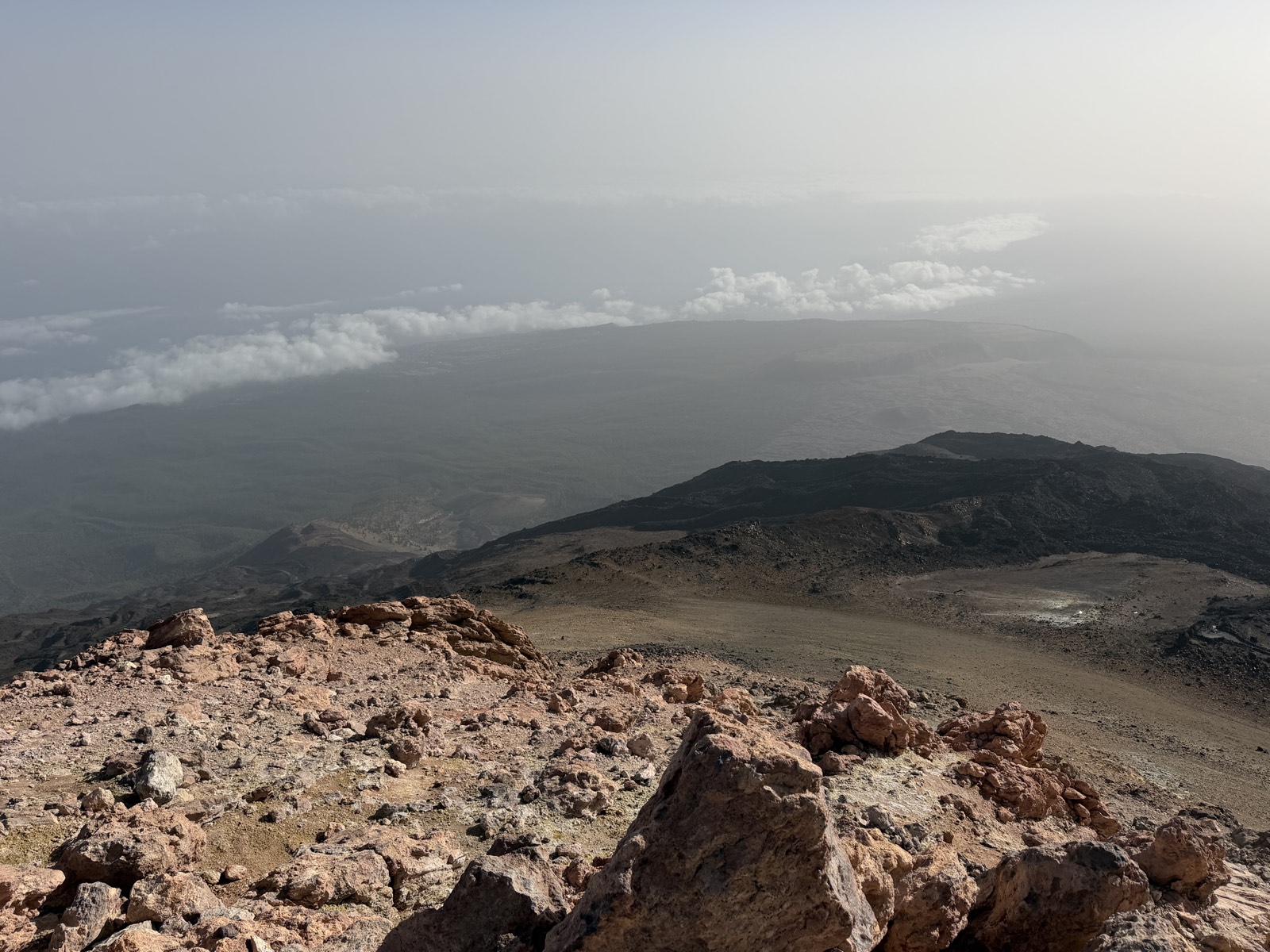
The volcanic terrain above the pine belt – roughly from 2,000 m to the summit – is a punishing environment. Daytime ground temperatures can become extreme on black lava; at night they drop below freezing. The ultraviolet index is high, the oxygen partial pressure low. Only organisms that can tolerate extreme desiccation, intense radiation and rapid thermal shifts persist. The result is a fauna that is sparse in number and highly specialised in behaviour.
What a visitor encounters is not a menagerie but a series of individual animals, each adapted to this thin edge of life. The most common sight is the Tenerife lizard, basking on sun‑warmed rock. After that come a few birds – the Berthelot’s pipit, the kestrel – and the insects that work the flowering plants. That is the list, and it is worth paying attention to.
The species you will see (and the one you might)
| Species | Where you are most likely to see it | Notes |
|---|---|---|
| Tenerife lizard (Gallotia galloti) | Around car parks, viewpoints, lava flows and the cable‑car stations | Males have blue throat and flank markings; they are habituated to people |
| Berthelot’s pipit (Anthus berthelotii) | Open caldera floor, Llano de Ucanca, Montaña Blanca track | Small, ground‑feeding, constantly bobbing its tail |
| Common kestrel (Falco tinnunculus) | Hovering over open ground anywhere in the park | Often seen hunting from a single perch or wind‑hovering |
| Mouflon (Ovis aries musimon) | Occasionally on the caldera rim or in the pine forest | Introduced in 1971; a conservation problem, not a highlight |
| Tenerife blue chaffinch (Fringilla teydea) | Pine forest on the approach roads, not on the high volcano | A special bird, but you must be in the right habitat |
The table covers the five animals a visitor has a realistic chance of seeing. None is guaranteed, but the lizard and the pipit are reliable on any dry, sunny day.
Tenerife lizard – the park’s most visible resident
By a wide margin, the animal you will see most often is the Tenerife lizard. It basks on lava blocks, on the walls of the Parador, on the metal railings of the cable‑car upper station. Males are striking: their flanks and throats carry patches of bright blue, a colour that stands out against the dark basalt. They are cold‑blooded and need the morning sun to become active, so they are most visible between about 09:00 and 13:00. By mid‑afternoon they retreat into crevices.
Visitors routinely offer food to these lizards. Biscuit crumbs, sandwich crusts, fruit. It is harmful – the sugar and salt disrupt their electrolyte balance, and the habit makes them dependent on human handouts – and it is not permitted. The park asks that you watch them, photograph them, and leave them to eat what they evolved to eat.
Berthelot’s pipit – the bird of the caldera
This small, streaky pipit is the characteristic bird of the open high ground. It feeds on the ground, walking with a characteristic tail‑bob, and flies only a short distance when disturbed. It is named after the French naturalist Sabin Berthelot, who worked in the Canary Islands in the mid‑19th century. The pipit is not flashy, but it is the species you will hear and see as you walk the Llano de Ucanca or the Montaña Blanca trail. It is present year‑round and breeds on the high slopes.
Kestrel – the hovering hunter
The kestrel is the only raptor a casual visitor is likely to see on the volcano itself. It hunts by hovering into the wind, scanning the ground for small reptiles and insects. It is often seen from the cable car or from the Roques de García viewpoint. The bird is a common species across Europe, but here it occupies the highest hunting grounds on the island.
The pine forest: where the richer wildlife lives
The high volcano is not the only habitat in the national park. Below about 2,000 m, the Canary Island pine (Pinus canariensis) forms a forest that is far more hospitable. Here the temperature is milder, the humidity higher, and the cover dense. This is where you find the Tenerife blue chaffinch.
The blue chaffinch is a finch endemic to Tenerife and La Palma, confined to the pine belt. The male is a deep slate‑blue with a pale belly; the female is duller. It feeds on pine seeds and insects. It is not a guaranteed sighting – it is shy and its population is limited – but visitors who stop at the picnic areas on the TF‑21 road, or walk the short trails near El Portillo, have a reasonable chance. The bird is the prize of the park’s avifauna, but you have to be in the right place: the pine forest, not the volcano.
The forest also holds the Tenerife lizard (in larger numbers), the Berthelot’s pipit (less common here), and the occasional kestrel. In addition, you may see the great spotted woodpecker and the plain swift overhead. But these are not the subject of this article; the point is that the richest wildlife experience is on the approach, not at the summit.
Mouflon: an introduced problem
The mouflon – a wild sheep originally from Corsica and Sardinia – was introduced to Tenerife in 1971 for hunting. It has done well in the pine forest and the caldera. You may see a small herd grazing on the grassy patches of the caldera floor, especially in the early morning or late afternoon. They are large animals, unmistakable, and they attract attention.
But the mouflon is a problem. It grazes on endemic plants, tramples fragile soils, and competes with native herbivores (there are none of any size, but the impact on vegetation is still damaging). The park authorities run a control programme. If you see one, treat it as an ecological curiosity, not a natural part of the ecosystem. It is a reminder that not every introduced species belongs.
Insects: the hidden workforce
The high volcano supports a surprising number of insects, though they are easy to overlook. The most visible are the bees and other pollinators that work the flowers of the Teide retama (Spartocytisus supranubius) and the tajinaste rojo (Echium wildpretii). In late spring and early summer, when the tajinaste is in flower, the spikes of red are covered with bees. The sound is a low hum.
Butterflies are present but not abundant. The Canary Islands brimstone (Gonepteryx cleobule) and the Canary Islands speckled wood (Pararge xiphioides) occur in the pine forest and occasionally on the caldera. Again, you have to look.
Bats: the invisible night shift
After dark, the high slopes are not empty. Several species of bat forage above the treeline, feeding on the insects that remain active in the cool night air. The most common is the Madeira pipistrelle (Pipistrellus maderensis). Visitors rarely see them – they are small, fast, and active only after sunset – but if you are on the caldera floor at dusk and watch the sky above a patch of retama, you may catch a flicker of movement. They are the only mammals that live permanently at these altitudes.
What you will not see
There are no large native mammals on Tenerife. No deer, no foxes, no wild cats. The largest native land animal is the Tenerife lizard. There are no snakes, no poisonous spiders, nothing that poses a danger. The park is safe in that sense. The danger is the environment itself: the cold, the sun, the altitude.
You will not see a rare species every time. The blue chaffinch is not a fixture. The mouflon is not a fixture. The kestrel may not appear. The honest expectation is the lizard, the pipit, and the quiet emptiness of the high ground. That emptiness is itself a kind of wildlife: the adaptation of life to a place where most life cannot go.
A note on planning your visit
If wildlife is a priority, the best strategy is to spend time in the pine forest on the way up, and then accept the high zone for what it is. The Teide National Park guide has practical information on access, timing, and the park’s regulations – including the rule about not feeding animals. The rest is patience and luck.