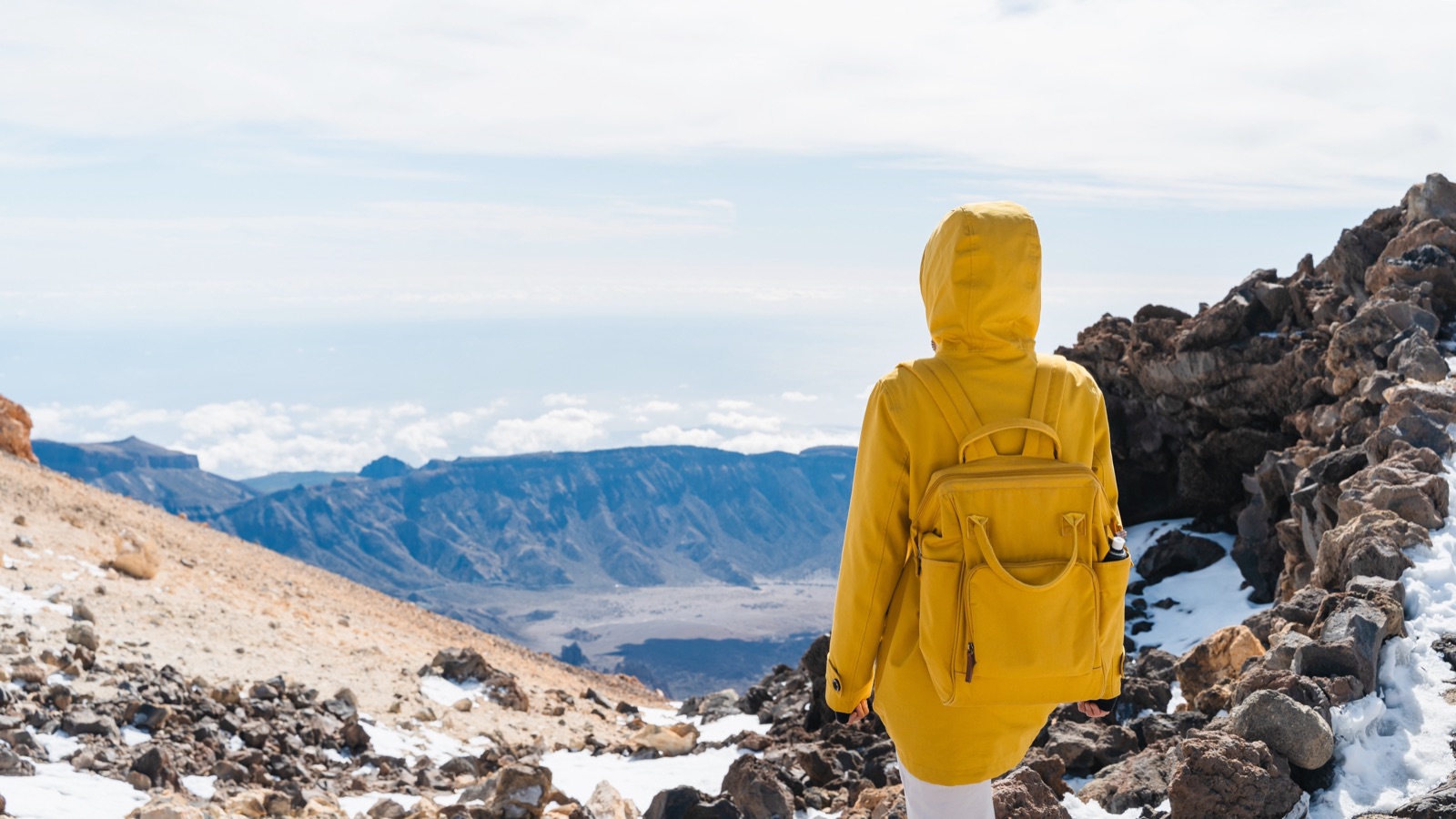
What to Wear on Mount Teide: Month-by-Month Layers and Kit
Deciding what to wear on Mount Teide is the single most common way visitors get their day wrong. You board the bus in a beach resort at 25°C, and three hours later you are standing at 3,555 m in a 40 km/h wind that feels like early February. I climbed to the crater on foot in July 2026, starting at midnight, and even in the hottest month of the year I was glad of a down jacket at 3,400 m. This guide gives you the exact kit for every season — pick the months you’re travelling below and you’ll see the full checklist, plus what to add if you’re going up for sunrise.
The one rule: dress for 20°C colder than the beach
Teide’s weather is not a worse version of the coast’s — it is a different climate altogether. Air cools by roughly 1°C for every 150 m you climb, and the resorts sit at sea level while the cable car base station is at 2,356 m and the summit at 3,715 m. Do the arithmetic and the top of the mountain runs 20°C or more colder than the beach you had breakfast on, before you add wind. The month-by-month weather guide has the full climate table from the Izaña observatory; the short version is that the plateau swings from occasional snow cover in winter to 23°C afternoons in July, while the summit is reliably 8–9°C colder than the plateau at any time of year.
The second thing to understand is the daily swing. In summer the caldera can genuinely be t-shirt weather at 2 pm and near freezing at 5 am on the upper mountain. That is why every kit below is built on layers you can add and shed, not one heavy coat.
Pick when you’re going
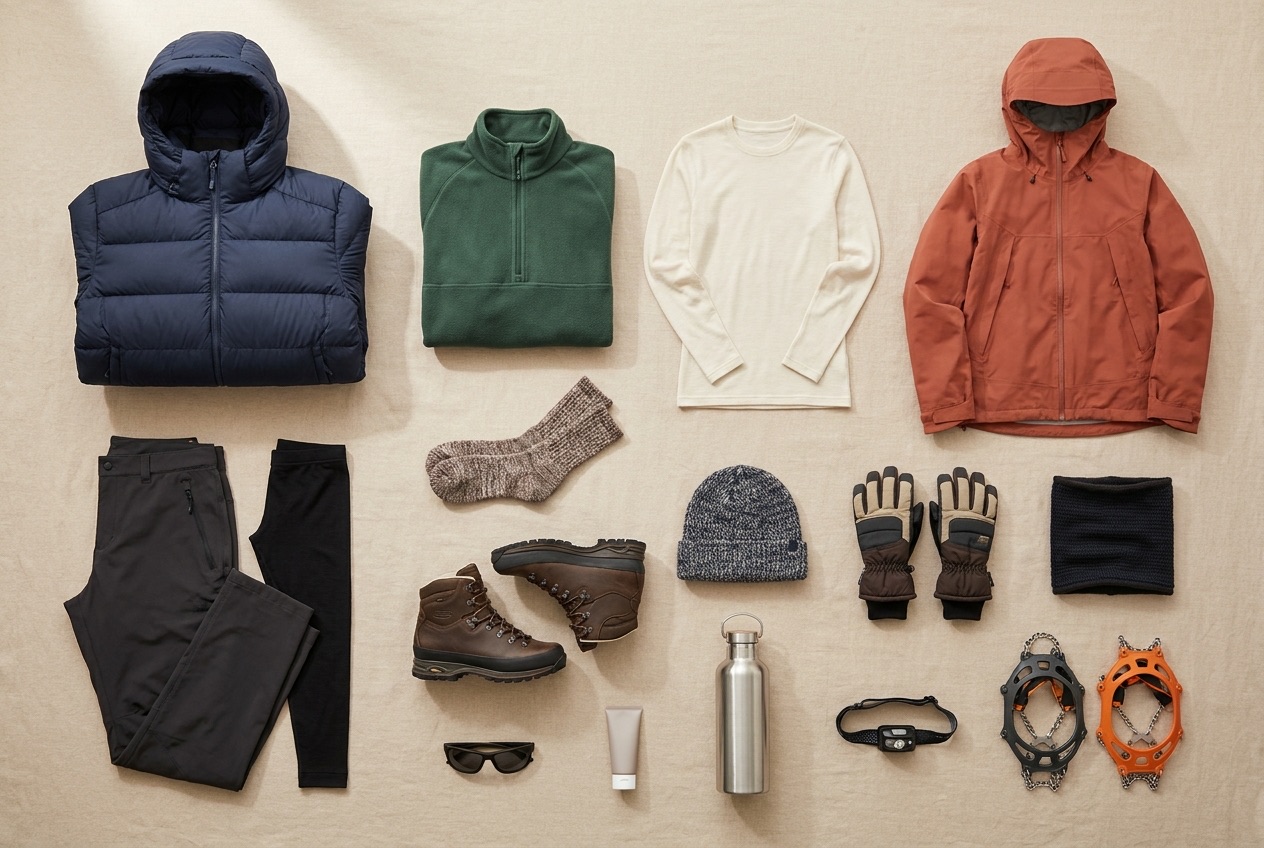
Plateau: ~7–10°C days, around 0°C nights · Summit: often below −5°C with windchill · Snow likely
On your body
- Thermal base layer — top and leggings
- Fleece midlayer
- Insulated down or synthetic jacket
- Waterproof shell jacket over the top
- Softshell hiking trousers
- Waterproof hiking boots + thick wool socks
- Warm beanie, insulated gloves, neck gaiter
In the pack
- Sunglasses — snow glare at altitude is brutal
- Sunscreen, even in January
- 1.5 l of water minimum
- Headtorch
- Microspikes after fresh snow — trails ice over fast
- Spare dry socks
Going up for sunrise? Wear everything on this list at once and you'll still feel the cold standing still. Check the wind forecast the night before — winter is when the cable car closes most often.
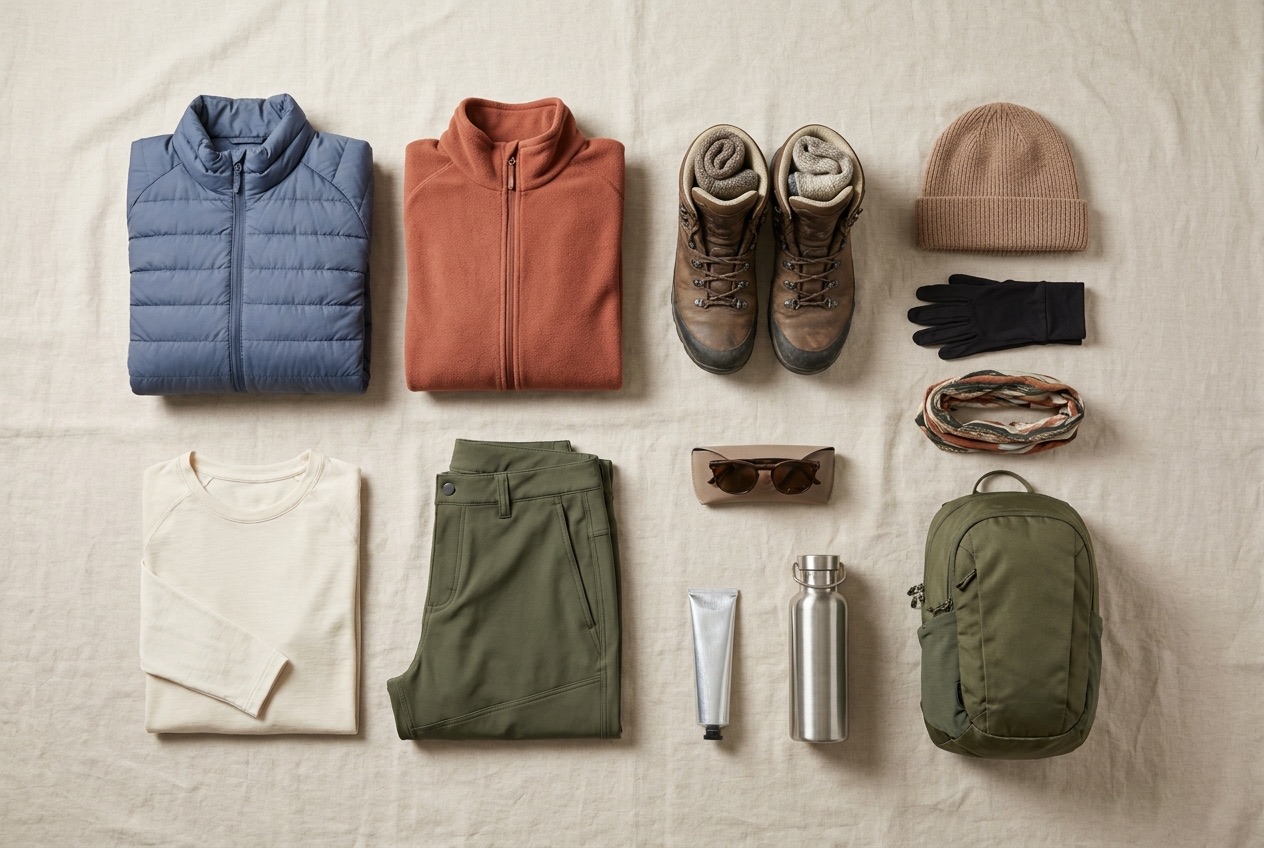
Plateau: ~12–15°C days, 3–6°C nights · Summit: single digits, windy · Late snow possible into April
On your body
- Long-sleeve base layer
- Fleece midlayer
- Light insulated jacket for the top station
- Softshell hiking trousers
- Hiking boots + wool socks
- Light beanie and thin liner gloves
In the pack
- Neck gaiter — the wind picks up with the afternoon
- Sunglasses and sunscreen
- 1.5 l of water
- Light waterproof — spring fronts still cross the island
- 20 l daypack to carry the layers you shed
Going up for sunrise? Pre-dawn starts are still around freezing on the upper mountain — add the winter hat, proper gloves and an extra midlayer. Easter crowds mean booking everything early; see the best-time guide.
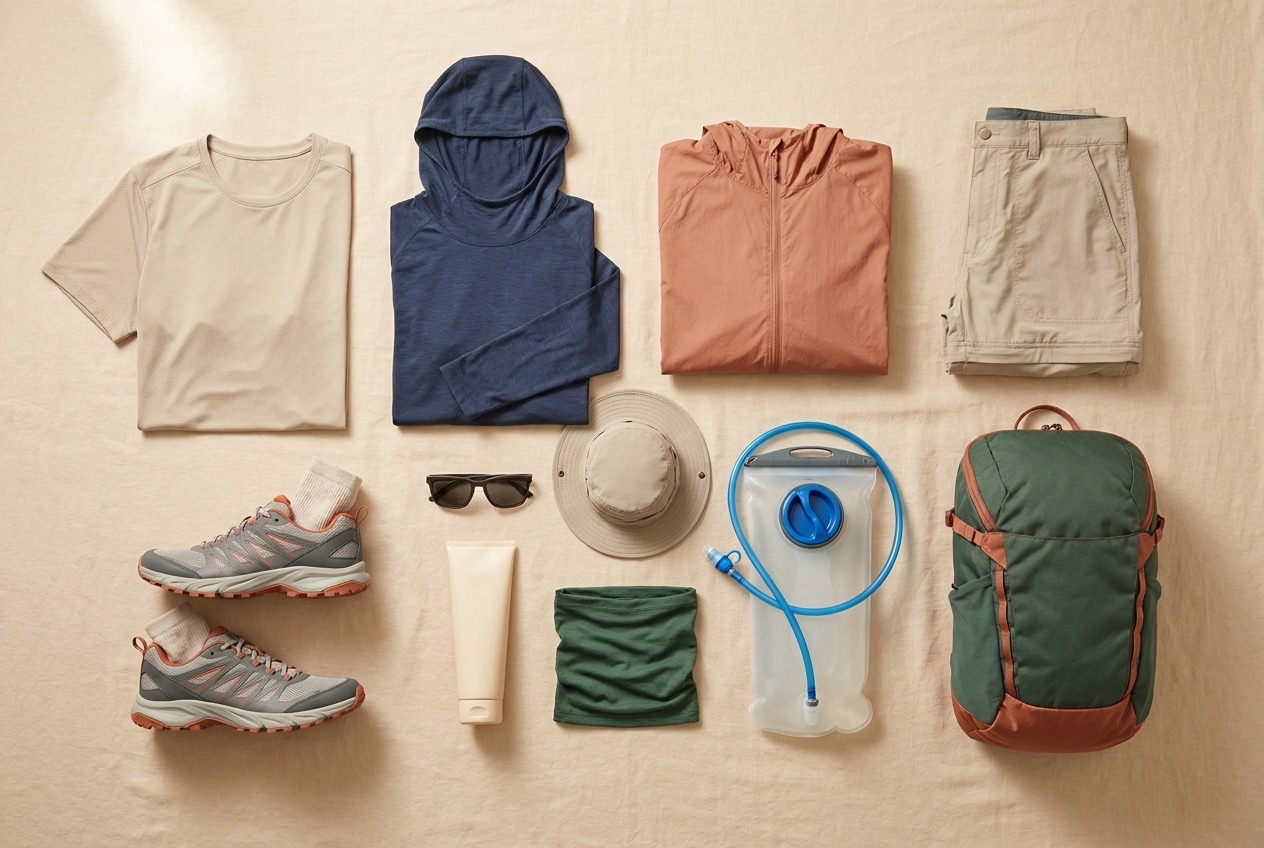
Plateau: ~19–23°C days, 10–14°C nights · Summit: 8–9°C colder + wind · UV extreme, zero shade
On your body
- Breathable hiking t-shirt
- Long-sleeve sun hoody — better than re-applying cream
- Light windproof shell for the top
- Zip-off trousers or shorts + a long pair in the pack
- Trail shoes or light boots + thin socks
- Wide-brim sun hat or cap
In the pack
- High-SPF sunscreen — the UV at 3,500 m is ferocious
- 2 l of water minimum, more if hiking
- Neck gaiter against sun and dust
- Light fleece — you will want it at the top station
- Sunglasses, non-negotiable
Going up for sunrise? This is the trap month. Night temperatures at 3,400 m sit in low single digits even in August — I set off at midnight in July and wore a down jacket, beanie and gloves before the summit. Pack full warm kit for any sunrise plan.
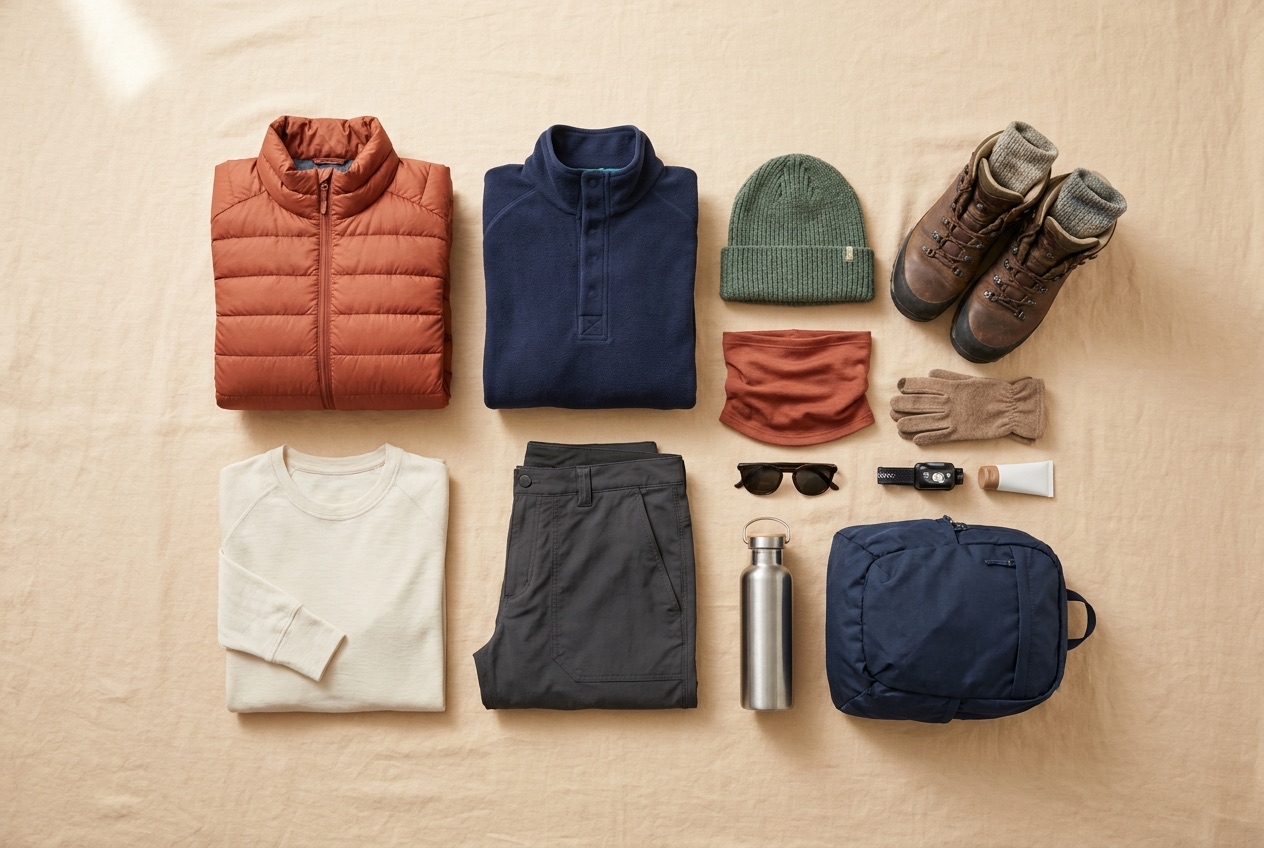
Plateau: ~11–14°C days, 4–7°C nights · Summit: cold and windy · First snow dustings from November
On your body
- Merino or synthetic base layer
- Fleece midlayer
- Light down jacket
- Hiking trousers
- Hiking boots + wool socks
- Beanie, light gloves, neck gaiter
In the pack
- Sunglasses and sunscreen — October sun is still strong
- 1.5 l of water
- Headtorch — days shorten quickly
- Waterproof shell from November onwards
- Daypack for shed layers
Going up for sunrise? October is the sweet spot — stable weather, thin crowds, but dawn on the upper mountain is already winter-cold. Full hat-and-gloves kit, and check sunrise times: first light comes noticeably later than in summer.
How the layers actually work
Every kit above is the same three-part system in different weights. A base layer against your skin moves sweat away — merino or synthetic, never cotton, which soaks and then chills you the moment you stop. A midlayer — usually fleece — traps warm air. A shell keeps wind and precipitation out, and on Teide the wind matters far more often than rain: the summit ridge regularly runs 30–50 km/h even on days the coast reports dead calm.
The system earns its keep because you’ll use it in both directions in a single day. Climbing, you’ll strip to the base layer within twenty minutes even in cool weather. The moment you stop at a viewpoint — or step out of the cable car into the wind at La Rambleta — you’ll want the midlayer and shell back on within a minute. Everything you shed needs to fit in the daypack, which is why it’s on every list.
Footwear: the pumice problem
Teide’s trails are not muddy, but they are ankle-breakers of a different kind: loose volcanic pumice and sharp lava gravel that rolls underfoot like ball bearings, especially on descents. In summer, fit hikers manage the main trails in sturdy trail-running shoes, and plenty of people ride the cable car up in ordinary trainers and walk the short viewpoint paths without drama. For the full Montaña Blanca ascent, boots with real ankle support and a stiff sole earn their weight on the way down, when tired legs and rolling pumice meet. From December to March, waterproof boots are mandatory on any trail — and after fresh snowfall the upper paths turn to ice overnight, which is what the microspikes in the winter kit are for.
The dawn factor: why sunrise changes everything
Most underdressed visitors on Teide made the same specific mistake: they planned for the day’s forecast but travelled at night. Sunrise missions — whether you hike through the night or stay at the Altavista refuge — put you at 3,400–3,715 m during the coldest hour of the 24, typically just before first light. Rules of thumb that have held every time I’ve been up there: whatever the plateau forecast says, subtract 9°C for the summit; subtract again for windchill; then remember you’ll be standing still watching a horizon, not generating heat. A down jacket, warm hat and gloves ride along on every sunrise plan in every month of the year, July and August included. A headtorch is non-negotiable, and the red-light mode keeps your night vision — and everyone else’s — intact.
Just riding the cable car? You still need a jacket
If your whole visit is the cable car and the viewpoint paths, you don’t need hiking kit — but the top station is at 3,555 m, and the temperature difference from the base still catches people in beach clothes every single day. The ride takes eight minutes; your body gets no time to adjust. Bring a proper warm layer and a windproof over it, wear closed shoes, and take sunglasses year-round. In winter, add hat and gloves even for a one-hour visit. Nothing warm is sold at the top.
Forgot something? Two Decathlons on the island
You don’t need to fly with a full mountain wardrobe. Decathlon has two full-size stores on Tenerife: one in the north at La Laguna, just off the TF-5 motorway at the Las Chumberas exit, and one in the south at San Miguel de Abona, beside the TF-1 near Las Chafiras — each about 40 minutes’ drive from the park on the usual approach roads. Between them you can fix any gap in the kit lists above for sensible money: fleeces, base layers, gloves, beanies, trail shoes, poles, headtorches, daypacks. Check current opening hours before you make a special trip, and don’t leave it for the drive up — neither store is on the mountain roads, and the visitor centres and cable car base sell souvenirs, not gear.
The five mistakes I see most
- Jeans and trainers on a snow day. Wet cotton at zero degrees is genuinely dangerous, not just uncomfortable. Denim has no place above 2,000 m in winter.
- No sun protection because it’s cold. UV climbs sharply with altitude, and the thin air does nothing to filter it. Cold days burn people fastest because nobody reapplies.
- One giant coat instead of layers. You’ll roast on the climb, freeze at the top, and have nowhere to put it in between.
- Planning for the daytime forecast on a sunrise trip. The pre-dawn summit is a different climate from the 2 pm plateau. Pack for the coldest hour you’ll be out, not the average.
- No water because it’s not hot. Altitude dehydrates you faster than heat does — the air at 3,500 m is dry enough that you lose moisture with every breath. Carry at least 1.5 l in every season.
Frequently asked questions
Do I need a jacket for the Teide cable car in summer?
Yes. The top station sits at 3,555 m, reliably 8–9°C colder than the base station before wind, and around 20°C colder than the coast. A fleece plus a light windproof is enough for most summer days at the viewpoints; you’ll see people shivering in vest tops within minutes of stepping out.
Can I wear shorts on Mount Teide?
In summer, on the plateau, at midday — comfortably. Higher up it depends entirely on wind, which is why zip-off trousers are the popular answer among hikers. From October to May, long trousers are the sensible default anywhere above the base station.
Are jeans OK for Teide?
For a quick summer cable car visit, you’ll survive, though you’ll feel the wind straight through them at the top. For hiking, or for any winter visit, no — denim is heavy, restricts movement, and is dangerous when wet and cold.
Do I need hiking boots, or are trail shoes enough?
For the viewpoint paths at the top: any closed, grippy shoe. For summer hiking on the main trails: sturdy trail shoes work if your ankles are used to rough ground. For the full summit climb, and for anything between December and March: boots — and microspikes after fresh snow.
How cold is it on Teide at sunrise?
Colder than almost everyone expects. Even in July and August the upper mountain sits in low single digits before dawn, and windchill routinely takes it below zero. In winter, expect well below freezing. Dress as if for a UK winter morning, whatever the month.
Where can I buy hiking clothes on Tenerife?
Decathlon’s two Tenerife stores — La Laguna in the north, San Miguel de Abona in the south — cover everything in this guide at budget-to-mid prices. Resort sports shops carry some of it at a markup; the national park itself sells none of it.